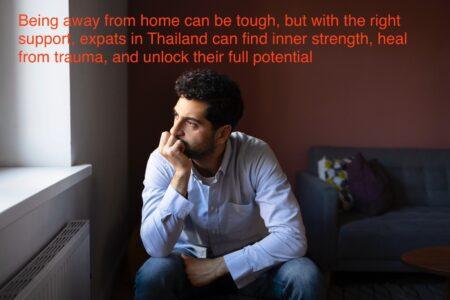
In our interconnected world, more people than ever are living far from home – whether drawn by career opportunities, love, or the allure of a new culture. Yet even in a place as vibrant and welcoming as Thailand, life away from familiar surroundings can carry an invisible weight.

According to a report by the World Health Organization (WHO), 1 in 6 people globally experiences loneliness, with significant implications for both physical and mental health. Social isolation, particularly among older adults, affects between 25–34% of the population. Even though 72% of people across all ages report feeling “somewhat connected” to others, many still live alone or without a partner, putting them at higher risk of disconnection.
Loneliness is not just an emotion. It’s a public health issue. It has been linked to an estimated 100 deaths every hour, or over 871,000 deaths annually, and is now recognized as a risk factor for conditions such as cardiovascular disease, type 2 diabetes, depression, and anxiety.

Even when Thailand offers so many ways to feel “at home” – from discovering your home country’s restaurants to joining communities that speak your native language – homesickness can linger. That’s because it is not simply about missing a place; it is about missing the people, identity, and sense of belonging that anchored you. Research shows expatriates are twice as likely to experience anxiety or depression compared to those living in their home country. While some adjust quickly to new cultural landscapes, others face a steeper climb – navigating work pressures, cultural differences, and the silent pressure to “appear fine” to loved ones back home. Over time, these challenges can lead to a loss of identity and symptoms that seem purely physical — insomnia, headaches, digestive issues, and lowered immunity – but are deeply connected to mental well-being.
We all have our own ways of coping with stress or feelings of depression.
These can include excessive drinking, comfort eating, compulsive shopping, endless scrolling, or even overworking. While they might provide a moment of relief, such behaviors can actually pull us further away from ourselves, as they often serve as ways of numbing or distracting rather than true grounding practices. Even habits that may seem normal ike binge-watching, oversleeping, or over-exercising can slip into unhealthy territory when they are mainly used to avoid discomfort.
“Sometimes you can do everything right — therapy, self-help books, meditation — and still feel stuck,” says Mike Miller, Founder & Clinical Director of Yatra Trauma Centre, who has over 20 years’ experience treating clients internationally. “That’s because trauma isn’t only stored in your mind — it’s stored in your body. Until you work with both, real healing can remain out of reach.”

Mental health treatment across Thailand is evolving to meet this need. Yatra Trauma Centre, for example, which Mike and Chu Miller founded in 2022, is not a typical clinic. It is an intimate, somatic healing retreat designed for no more than eight clients at a time – a sanctuary where emotional and physical restoration happen side by side.
Yatra’s approach integrates evidence-based therapies with body-focused modalities to address deep-rooted emotional wounds. Personalized treatment programs include Internal Family Systems (IFS) Therapy, Eye Movement Desensitization and Reprocessing (EMDR), Post-Traumatic Stress Disorder (PTSD) Treatment, Cognitive Behavioural Therapy (CBT) Somatic and Bodywork Therapies, Muay Thai Coaching for Mind and Body, Yoga Therapy for Trauma Recovery and Pottery as Therapy.
Whether you are facing chronic stress, burnout, unresolved trauma, or PTSD from experiences such as accidents, abuse, loss, or work-related pressure, Yatra offers a level of personalised care rarely found outside of private, clinical environments. The experience is immersive, confidential, and designed to help clients return to their lives with a renewed sense of strength and clarity.